What is modularization, and what are its advantages in industrial processes
The global industry is increasingly focused on delivering flexible, efficient processes with lower operating costs. In this context, the modularization of automation solutions has evolved from being a good practice to becoming an inevitable path to competitiveness.
What is modularization?
Modularization is the concept of designing solutions from independent and interchangeable modules that can be combined, replaced, or expanded as needed.
Unlike monolithic and rigid systems, modularization enables solutions to grow in tandem with the process, eliminating the need to replace everything when changes occur.
How did the modularization trend emerge?
Modularization began gaining momentum in the 1980s and 1990s, driven by the need to reduce costs and increase flexibility in increasingly dynamic production lines.
Initially applied in sectors like automotive and information technology, the idea was clear: to break down complex systems into smaller, standardized, and easily replaceable parts.
With the advancement of automation and digitalization, this approach spread to the industry as a whole, becoming essential to meet demands for mass customization, agile maintenance, and integration with new technologies. Today, it is seen as a key element of Industry 4.0.
Current examples
Modularization is used in various industrial sectors, such as:
- Industrial automation: PLCs and controllers already follow this principle, with slots for I/Os, communication, etc.;
- IT & Software: microservices architecture and containers like Docker follow this logic;
- Electronics & Hardware: industrial computers, data loggers, and even collaborative robots have replaceable or expandable parts;
- Energy & Construction: modular batteries, block-based solar panels, buildings with prefabricated modules.
Benefits for customers
Modularization offers direct advantages for those who operate, maintain, or design industrial processes, such as:
- Cost reduction: only the necessary module is replaced, not the entire system;
- Simplified maintenance: modules can be quickly replaced without stopping the whole line;
- Customization: each process has an ideal combination of modules;
- Sustainability: extends equipment lifespan and reduces waste.
How NOVUS applies modularization
At NOVUS, modularization is not just a trend but has been part of our products for years, helping companies worldwide gain efficiency and flexibility.
N20K48: Modular control in practice
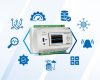
The N20K48 is a modular controller designed for industrial processes that require precision and scalability. It allows combining different input and output modules in a single device, supporting up to 8 modules in the same rack.
This means you can adapt an N20K48 to control variables such as temperature, humidity, pressure, level, or flow without needing a different device for each application.
With its new remote control functionality via Wi-Fi and MQTT, the N20K48 also meets the growing demand for connectivity and remote process management, combining physical modularization with digital integration.
The future is modular
With the need for increasingly intelligent and sustainable processes, modularization is expected to become even more central to industrial automation.
At NOVUS, we remain committed to developing innovative, flexible solutions aligned with market needs, helping our customers grow efficiently.
If you’re not yet familiar with our modular products, contact our team and discover how NOVUS can help transform your process.