High Limit Alarm (High Limit): What It Is and How to Protect Industrial Thermal Processes
In industrial applications—especially those involving thermal control, ensuring process stability, and making sure the system is protected against failures that can lead to hazardous conditions is only part of the challenge. That’s exactly where the High Limit concept becomes indispensable.
What is a High Limit Alarm?
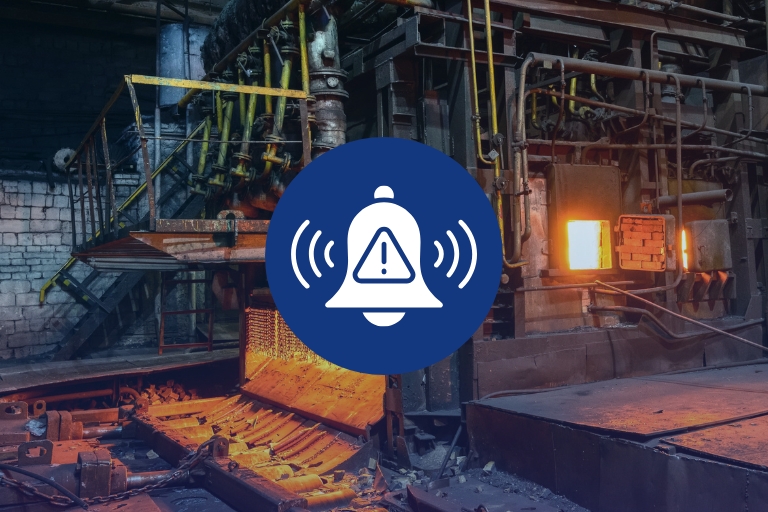
A High Limit alarm, or safety high limit, is an additional layer of protection designed to act when a variable exceeds a value considered safe. Unlike a conventional alarm—which only signals an abnormal condition—High Limit performs a direct action on the process, such as shutting down a heating system, preventing the situation from escalating.
This is especially important when the main controller, responsible for keeping the process at the setpoint, does not respond as expected.
How does it work in practice?
In practice, High Limit operates continuously and independently, monitoring critical variables such as temperature. If the value exceeds the configured limit, the system automatically interrupts operation and keeps the process locked out until a manual intervention is performed.
This prevents the system from automatically returning to operation without prior analysis, reducing risk and ensuring greater control over the situation. In many projects, this logic is implemented as a separate layer from control, specifically to increase protection reliability.
Where is High Limit applied?
This type of protection is common in processes where thermal control is critical, such as industrial ovens, drying ovens, boilers, and applications in the food and pharmaceutical industries. In these situations, temperature deviations can compromise both product quality and operational safety.
In many segments, the use of independent safety devices is not only recommended but required by technical standards and engineering best practices.
Why implement a High Limit?
The absence of a protection system like High Limit can lead to equipment damage, production losses, and risks to operational safety. In addition, processes without this extra safety layer are more susceptible to unplanned downtime and regulatory non-compliance.
By incorporating High Limit, the process becomes more robust, reliable, and better prepared to handle unexpected failures, ensuring greater operational predictability.
How to apply it in practice
Protective strategies can be implemented efficiently using proven solutions, such as those in NOVUS’ portfolio.
Continuous monitoring and event logging are essential for analysis and continuous improvement. In this context, solutions such as FieldLogger support event traceability, enabling you to identify deviations, validate corrective actions, and prevent recurrence.
More safety, more reliability
By incorporating High Limit into the process architecture, operation gains an additional layer of protection that goes beyond conventional control. It’s an approach that not only reduces risk but also strengthens operational continuity, protects assets, and ensures final product quality.
In an industrial environment increasingly driven by efficiency and reliability, investing in process safety is no longer a differentiator—it becomes an essential requirement.
To learn how to make your industry even more protected, talk to a NOVUS specialist.