Case of success: remote monitoring of hybrid pumping for water supply in a critical environment
Keeping water pumping systems operating reliably in a remote environment is already a considerable challenge; when this operation also depends on a hybrid architecture (solar photovoltaic + diesel), involves multiple measurement points, and requires disciplined Operations & Maintenance (O&M) with periodic reporting, complexity rises to another level.
It was in this context that an international integrator implemented monitoring for five hybrid pumping systems in a large refugee camp in Northwest Africa, to turn field signals (electrical, hydraulic, and environmental) into operational visibility and consistent data to support maintenance routines, supervision, and decision-making—without disclosing the names of the organizations, location, or partners involved.
The scenario and the challenge
This application plays a critical role: the energy generated is used primarily to power the water pumps, which supply water to the entire camp. According to project information, people living in the camp do not have access to electricity, and the site hosts more than 200,000 people, making pumping continuity and operational predictability even more important.
In this project, the need was not only to “see” what was happening, but to track the performance of each system with enough detail to support an evidence-based O&M routine. In practice, that means reducing reliance on manual data collection (which tends to create delays, inconsistencies, and operational costs), consolidating information that is often scattered across devices, and—most importantly—ensuring traceability: produced water, generated/consumed energy, and operating conditions must connect into a single data narrative.
Among the mapped challenges were the need for centralized visibility across multiple pumping points, accurate measurement of water production and energy performance (including comparing the contributions of solar PV and diesel), and quickly identifying unplanned stoppages to shorten response time. In a project with high operational and logistical relevance, every information gap has a cost: it increases uncertainty, prolongs troubleshooting, and makes reporting more time-consuming and prone to error.
How water reaches the camp (system overview)
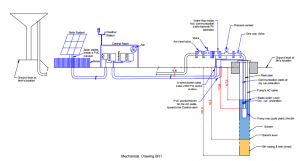
Water is pumped and stored in large tanks of approximately 300 m³ each. From these reservoirs, it is distributed to refugees through pipelines and a distribution network throughout the camp. This storage and distribution architecture helps maintain supply even in a challenging environment.
In addition, the tanks and piping systems are interconnected, contributing to system resilience: if one pump has a problem, other pumps can compensate and help maintain water production.
What needed to be measured to support O&M
Monitoring had to meet the day-to-day needs of operating and maintaining the pumping systems and power generation (solar and diesel). The starting point was to measure, record, and make available the amount of water produced, both as monthly totals and on a day-by-day basis, to track production and identify variations.
On the energy side, it was important to track how much energy came from the solar photovoltaic system (solar panels) and, when necessary, from the diesel generator, including how many hours the generator was running.
Beyond knowing “how much was generated,” it was essential to understand “how it was generated”: therefore, solar system efficiency was assessed by comparing available sunlight (irradiance) with the energy actually generated.
This monitoring was complemented by records of unplanned downtime (when the system stops unexpectedly), the duration of those stoppages, faults and alarms, and the history of completed operating and maintenance activities. In short, data needed to be collected on site, reach the team’s monitoring process reliably, and be easily used to create reports—without frequent manual logging and data collection.
The solution: FieldLogger at the center, connectivity via AirGate 4G Lite, and data management in NOVUS Cloud
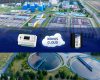
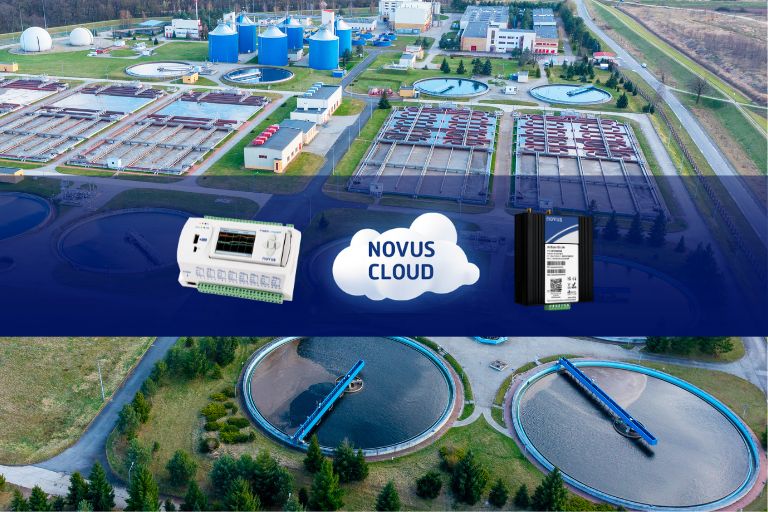
To enable this flow, the solution centralized data acquisition and logging in the FieldLogger, on a Modbus network, with external communication handled by the AirGate 4G Lite acting as a gateway.
In practice, the FieldLogger serves as the core for acquiring and consolidating field data, while the AirGate 4G Lite, connected via Ethernet, sends this information to the cloud whenever connectivity allows. The data was structured for use in NOVUS Cloud, supporting data organization and the creation of reports based on the collected records.
It is important to note that, after implementation, monitoring is performed mainly on site, due to limited 4G and internet availability in the region. As a result, remote access is not always possible, since it depends on local connectivity conditions.
Field integration
At the instrumentation level, RS485 Modbus integration connected the key elements required to “tell the full story” of the hybrid system. AC and DC energy meters were added to record electrical quantities, a weather station provided irradiance and environmental conditions (essential to explain generation variations and support efficiency analyses), and a flow meter measured water production directly.
Pressure sensors helped manage hydraulic conditions, pump inverters provided operational data and supported system control, and a dry-run sensor helped protect against running without water. By bringing these sources together at a single collection point, operations shift from viewing isolated “data islands” to seeing correlations—for example, linking production variations to operating events, hydraulic conditions, solar incidence, and energy behavior.
Why these products: selection criteria
The choice of FieldLogger and AirGate 4G Lite was driven by integration and robustness criteria: native RS485 communication support facilitated direct integration with meters and sensors; the ability to centralize multiple variables in one device reduced complexity and failure points; data logging and connectivity enabled information consolidation and reduced the need for manual collection; reliability is essential for remote and harsh environments; and flexibility to structure and export data according to reporting requirements helped ensure continuity and consistency without recurring manual extraction.
For technical audiences, this translates into a cleaner architecture and direct integration; for commercial audiences, it means predictability, scalability, and reduced operational effort to keep the system “auditable” over time.
Results and operational impacts
The project delivered relevant operational impacts: improved visibility into the performance of the five pumping systems, more automated and more accurate O&M reports (including water production, solar PV versus diesel energy balance, and system performance), better resource management with traceability of water production and energy consumption, faster identification of faults and unplanned stoppages with reduced response time, and the ability to analyze efficiency based on data—especially solar system performance by correlating irradiance and generation.
Beyond operational use, reports are not only internal: they are used both for monitoring and for accountability, and are shared with international organizations and stakeholders. An additional benefit noted in the project is that the reports began to include local climate data that had not been available before, helping to contextualize performance over time.
Maintenance and continuity of supply
Local operation and maintenance are performed by on-site technicians. There is a maintenance support contract that includes remote assistance and two on-site visits per year. In larger or more complex cases, additional travel is possible when the local team cannot resolve the issue.
Because the tanks and distribution network are interconnected, the system also has a degree of resilience: when one pump fails, others can compensate and keep water production going, reducing the impact of an isolated event.
Count on NOVUS
This success story reinforces a simple, decisive point: when O&M requires reporting, traceability, and quick response, monitoring must be an integral part of the system—especially in remote environments and critical water supply applications.
By consolidating acquisitions in the FieldLogger and ensuring connectivity with the AirGate 4G Lite (according to local conditions), the project established a consistent path between the field and data management, enabling better supervision and data-driven operational support.
Learn more about FieldLogger, AirGate 4G Lite, and NOVUS Cloud on our website.
If you prefer, talk to one of our specialists and see how this application can support your business.