How to Apply Thermal Profiling, Preventive Maintenance, and Remote Diagnostics in Industry
When we talk about temperature monitoring, we refer to processes in which precision, preservation, and control are decisive factors. However, even within the industry, we can find segments with different needs within a single process. Therefore, recording the thermal profile and using the correct measuring equipment for each situation becomes essential.
If we analyze industrial processes that require more than one controlled temperature setting, PID controllers are perfect for ensuring quality, as they provide quick and highly precise responses in dynamic processes with complex profiles. However, when working with specific temperature profiles, control must go beyond the PID.
Specific Thermal Profiles
Working with a specific profile involves several procedures and standards that must be followed to avoid affecting the process. A good example is Thermal Chamber Calibration, which must comply with the applicable regulations for that category of operation. Therefore, more than one sensor is used to monitor multiple zones and obtain a better understanding of the temperature behavior.
Another important process involving specific profiles is Heat Treatment of Parts, which serves various sectors and markets with a wide range of applications.
This type of process is essential when parts need to reach a specific hardness level to meet technical requirements for performance and durability. Some of the main industries that use this treatment include:
- Automotive and Aeronautical Industry;
- Metalworking Industry;
- Agricultural Industry;
- Construction Industry.
In industries that work with engine parts, heavy materials, gears, etc., the hardness and temperature levels must be very well defined, as they need to comply with current quality standards and norms for subsequent processes.
Another major specific profile application is the Sterilization and Hygiene of Tools, where we find a wide range of segments and applications, such as:
- Hospital;
- Laboratories;
- Cosmetics;
- Aesthetic Medicine;
- Dental Medicine.
These processes use sterilization and hygiene equipment such as autoclaves or even humidity and temperature controllers.
We should also mention the Plastics Industry, one of the major segments when it comes to temperature treatment and monitoring, with processes such as packaging, molding, extrusion, and equipment like shrink tunnels, among others.
The N1040, a NOVUS product, is widely used in the plastics industry due to its cost-effectiveness and precise PID control.
The importance of records
Records serve as proof of what is being done, in addition to helping with batch tracking (identifying problematic batches) and audits that are conducted to verify compliance with procedures and applicable standards.
In processes using temperature controllers or specific controllers, the equipment operates with a setpoint, ramps, and levels defined according to the applicable standards.
These parameters can vary in aspects such as:
- stabilization time;
- Overtemperature alarms (temperature above target);
- Tolerance of variations during the stabilization period.
When all this information is recorded, it is possible not only to assess and trace past batches but also to monitor the process in real time during execution.
In real time, we can verify whether stabilization reaches the required level, whether it will maintain stability, if the overtemperature hits its maximum level, whether the ramps and levels behave as required, or any other necessary information.
This monitoring is crucial because product wear or degradation over time (due to temperature, humidity, or poor installation) can change its behavior and prevent optimal performance.
Therefore, this monitoring helps identify nonconformities, allowing them to be detected and corrected as quickly as possible. Without swift action, the problem can cause significant losses, especially in batches with thousands of units.
Another important point is that clients often demand process records to prove that procedures were correctly followed. These records serve as compliance evidence and are frequently requested by auditors during validations.
Record Storage
To record data, it must be stored in a database. Today, there are various options on the market, but the traditional method is using a Data Logger (such as NOVUS’s FieldLogger). The controller is connected to the data logger, which reads and stores the information in its memory. This data can then be analyzed in real time or later through a data acquisition software or SCADA supervisory software.
This helps us understand the different types of profiles and how each segment or application is shaped by the correct process, in addition to the importance of recording all data, essential when aiming for product and service quality excellence.
Preventive Maintenance
In every large operation, it is necessary to supervise the process to ensure everything is aligned and running as it should. But processes don’t remain linear forever, so we must know when to apply Preventive Maintenance. To do that, we will look at key maintenance indicators like MTBF and MTTR, which measure maintenance performance, as well as the ABC classification and types of maintenance.
NOVUS offers a specific product for this task: the LogBox LTE.
MTBF and MTTR Maintenance Indicators
The MTBF and MTTR indicators are the two main maintenance metrics used by companies across various sectors, especially in industry. They are also used for performance monitoring and improvement, and serve as the basis for calculating other indicators. The main objective of any organization is to increase its MTBF and reduce its MTTR, as we’ll see below.
MTBF
MTBF stands for Mean Time Between Failures. In other words, it refers to the average time between a failure (an error or unplanned stop) and the next failure that will still occur. Below is the formula and an example:
MTBF = (Total Time – Downtime) / Number of Failures
Example:
A piece of equipment had 3 failures (or unplanned stops) with 2 hours of downtime. Knowing that the total process lasted 17 hours, we calculate:
MTBF = (17h – 2h) / 3 = 5h
In this case, the equipment operated an average of 5 hours between failures.
MTTR
MTTR stands for Mean Time To Repair. It refers to the average time it takes to perform a repair or correction after a failure has occurred. The formula and example are:
MTTR = (Downtime) / Number of Failures
Using the same example as before:
MTTR = 2h / 3 = 40 minutes
So, on average, each repair took 40 minutes.
Important note: These values are estimates based on past performance. It does not mean the equipment will fail every 5 hours precisely. These indicators serve as statistical references to improve and refine processes.
But why is knowing these numbers so important? Because downtime equals money lost in the factory and across the company. The more we can predict when a machine is likely to fail, the better we can plan for preventive action. If we know the average time between failures is 5 hours, we can schedule an inspection every 3 or 4 hours to avoid major breakdowns.
ABC Maintenance Classification
The ABC classification is used to define the severity of a failure, considering factors like the part involved and the risks associated with that failure. Some parts, when they fail, have a much greater impact than others (similar to the concept of master and auxiliary gears). The classification also considers the risk level of a process error. Here’s how the levels are defined:
- Class A – High-priority equipment and machinery, where failure poses serious risks to people or environmental contamination.
- Class B – Medium-priority stoppages; the failure won’t cause a major accident but will affect machine performance or production capacity.
- Class C – Low-priority issues that neither cause major accidents nor directly impact production, such as a printer malfunction, unless the printer is essential to the production line. In that case, its priority may rise to medium or high.
With these classifications, we can define the appropriate type of maintenance for each situation.
Types of Maintenance
Maintenance types are determined by the risk and priority associated with each failure.
- High-risk, high-priority failures → Predictive Maintenance
- Medium-risk failures → Preventive Maintenance
- Low-risk failures → Corrective Maintenance
Corrective maintenance doesn’t require planning—it’s done when a problem arises and needs fixing. But both Predictive and Preventive Maintenance require planning.
Predictive Maintenance
Predictive maintenance demands a more detailed approach. It involves identifying “symptoms” that could lead to issues and requires continuous monitoring to detect root causes of potential failures in advance.
Preventive Maintenance
This also requires planning, but is supported by data collected via MTBF and MTTR. Knowing the MTBF helps schedule inspections before expected failures, while the MTTR gives an estimate of repair time and necessary machine downtime.
Both predictive and preventive strategies require a data system to store maintenance history and organize a maintenance calendar. Corrective maintenance doesn’t require such tracking—unless centralizing all records is preferred. This once again reinforces the importance of using a Data Logger in industrial operations.
Ultimately, combining all these steps creates a maintenance and adjustment routine for machinery or operations that helps ensure consistent product quality and process reliability.
Remote Diagnostics
Remote Diagnostics refers to identifying or correcting problems in systems or devices by transmitting and receiving information over the internet. In other words, it allows remote monitoring of equipment or entire processes.
Possibilities with Remote Diagnostics
From the office, home, or any location, it is possible to identify issues and even make corrections and adjustments remotely.
Example:
A VPN router is connected to a Data Logger. Access is made through SCADA software or a dedicated application from the controller or logger, all done remotely over the internet.
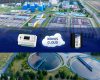
Using a VPN server enhances this process by enabling real-time data reading, comparisons, or even remote adjustments to PID controllers or data loggers.
Advantages and Disadvantages of Remote Diagnostics
Main Advantage:
No need to physically travel to the equipment’s location.
Other advantages:
- Planning & Scheduling: Enables proactive visits for predictive or preventive maintenance based on real-time data. Saves time and travel costs.
- Parameter Adjustments: Allows reading, adjustment, and real-time status monitoring.
- Asset Management: Facilitates centralized control of equipment across multiple sites.
Main Disadvantage:
- Implementation Cost: Initial setup can be relatively expensive. However, with proper planning and execution, ROI is strong both in financial savings and operational quality.
Remote diagnostics is a powerful investment for companies entering the world of industrial connectivity, a reality that is becoming more common globally. With proper planning and resource allocation, the returns are consistently positive.
Count on NOVUS
With over 40 years of experience in industrial monitoring, NOVUS develops technologies that support every stage described in this guide, from precision PID control and thermal profiling to data logging and secure remote diagnostics via connectivity gateways.
Whether your application involves critical operations like sterilization, heat treatment, or continuous processes in industrial environments, NOVUS solutions deliver traceability, reliability, and full integration with quality systems. If your operation demands efficiency, control, and compliance, contact a NOVUS specialist and discover how we can support your automation and industrial digitalization journey.