Success Case: how a company reduced costs, gained predictability, and stabilized its IT operation with NOVUS products
Vermont, a company with more than 29 years of experience in Omnichannel services and Business Process Outsourcing, faced a critical challenge: maintaining the stability of its Data Center and IT environments by controlling temperature and humidity with precision — without relying on old, wired systems that were faulty and expensive to maintain.
With thousands of daily interactions via phone, WhatsApp, social media, and other channels, any infrastructure failure could directly impact operations and the experience of customers and patients served by the company. A reliable, preventive, and scalable solution was needed.
The Problem
The operation used wired sensors mounted on walls. Readings failed, alerts were not sent correctly, and there was no remote access or historical logging. All analyses depended on manual inspections and manual transfer of data.
Whenever deviations occurred in the recommended temperature or humidity ranges, the IT team had to call maintenance by phone or e-mail, and technicians traveled on-site to investigate. Often, the issue was just an incorrect reading, generating unnecessary travel, unnecessary expenses, and posing a real risk of complete server shutdown.
In addition to operational insecurity, corrective maintenance costs were high and recurring.
Diagnosis
The first step was a video conference to map the history, pain points, and limitations of the current system.
Next, our team carried out a technical visit to Vermont’s headquarters in São Paulo to:
- assess the physical environments (CPD, TC1, TC2, and administrative office);
- test Wi-Fi and LoRa signal reach and stability in multiple spaces;
- Validate the feasibility of communication between sensors and the gateway.
The scenario confirmed the need for a robust, wireless, highly reliable solution with preventive analytics capability.
The Proposed Solution: 75-day POC, real-time monitoring, and smart alerts
NOVUS offered a free 75-day Proof of Concept (POC), allowing Vermont to validate performance before acquisition.
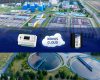
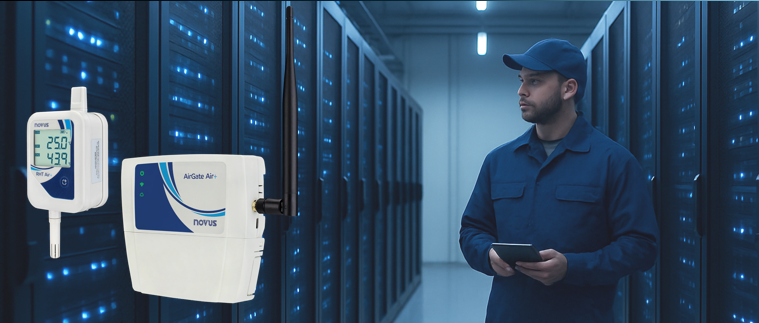
The proposed architecture included the Climate Air+ Solution, consisting of:
- 1 AirGate Air+ Gateway installed in the administrative office
- 4 RHT Air+ sensors distributed in the environments (CPD, TC1, TC2, and office)
- Real-time monitoring through NOVUS Cloud for up to five users
- Custom dashboard with continuous temperature and humidity data
- Email and SMS alerts for IT and maintenance teams according to ASHRAE ranges (18–27 °C / 40–60% RH)
With this, the company gained instant visibility, consolidated history, and preventive operation without cables, on-site visits, or manual data collection.
Validation Process
The validation matrix followed ASHRAE recommendations and was structured into three cycles:
Cycle 1 – 15 days
Working temperature: 18 °C
Thermal behavior identification per environment
Result: environments with different averages and RH above ideal
Action: HVAC adjustment to 20 °C
Cycle 2 – 15 days
Adjusted temperature: 20 °C
Joint data analysis
Result: clear improvement in temperature and humidity averages
Action: increase to 22 °C
Cycle 3 – 30 days
Adjusted temperature: 22 °C
Result: thermal and psychrometric balance in all environments
Additional benefit: direct reduction in HVAC energy consumption
Automation allowed each change to be based on real, safe, continuously recorded data — eliminating guesswork.
Results: energy savings, continuous stability, and impressive ROI
With optimization based on sensors and NOVUS Cloud monitoring, Vermont achieved a 33% reduction in HVAC energy consumption.
Comparison between operating at 18 °C vs. 22 °C:
- 506 kWh/month saved per HVAC unit
- Equivalent to ~ R$552,00/month per unit
Considering four units:
- Monthly savings: R$2.197,44
- Annual savings: RR$26.369,28
ROI in just 5 months
With the Climate Air+ solution costing R$10,833.27, 10.833,27the return was fast and fully measurable.
Positive environmental impact
- 9.03 tCO₂/year avoided
- 30 m³ of water saved (equivalent to removing 2 cars from the roads for one year)
Full operational stability
- Temperature and humidity within the ASHRAE ranges 24/7
- Fewer emergency calls
- Zero unnecessary technician visits
- Greater predictability for IT and maintenance teams
IoT automation that reduces costs, eliminates failures, and increases reliability
Vermont moved from a wired, costly, unstable system to an operation that is:
- connected,
- preventive,
- scalable,
- supported by continuous data analysis,
- and with a clear financial return.
The process was conducted with rigorous technical validation, transparency, and joint monitoring — allowing the client to see real impact within weeks.
The combination of Air+ LoRa sensors, Gateway, NOVUS Cloud, and a data-driven validation methodology was essential to:
- Stabilize the Data Center,
- improve psychrometric indicators,
- optimize energy consumption,
- increase operational reliability,
- and reduce corrective maintenance costs.
About Climate Air+
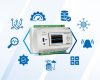
The solution integrates two devices: RHT Air+, a high-precision temperature and humidity sensor with internal memory, and AirGate Air+, an IoT gateway responsible for receiving and transmitting the data. Together, they collect, log, and transmit real-time measurements, ensuring continuous monitoring in compliance with applicable standards. Up to 32 sensors can be integrated per Gateway.
Communication occurs through encrypted radio, ensuring stable operation even in environments with multiple physical obstacles. In an open field, the sensor-gateway range can reach 3 km.
Both RHT Air+ and AirGate Air+ feature local storage capacity for up to 50 days (5 minute publishing intervals), ensuring data preservation even in communication loss scenarios.
Want the same results in your Data Center?
Talk to a NOVUS specialist and discover how to implement intelligent automation in your operation.